In plain terms
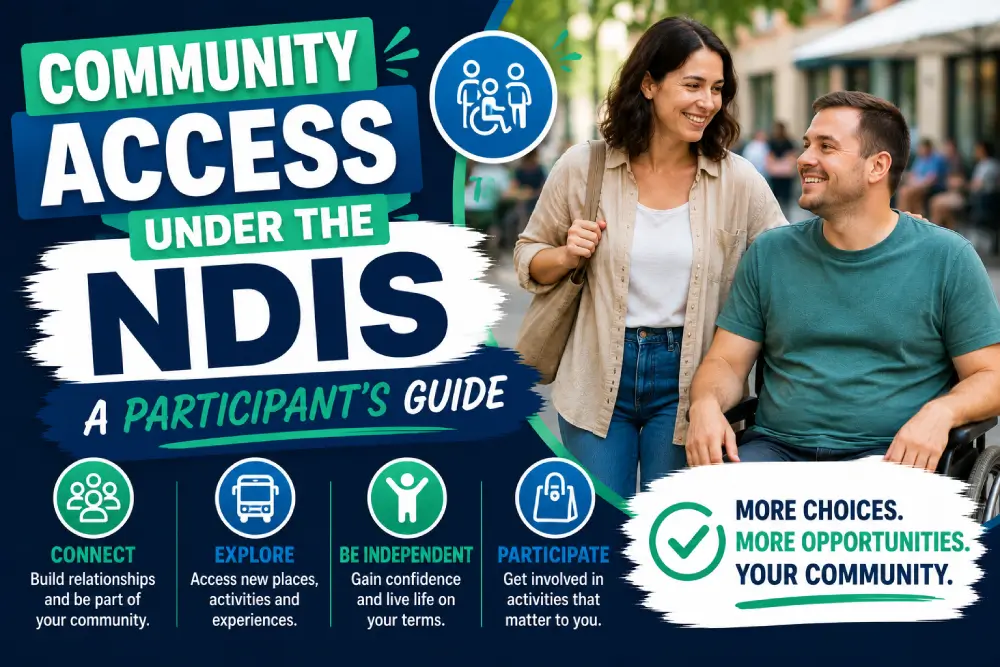
Community access funding pays for a support worker to help you do things in the community — shopping, appointments, recreation, social events, classes, outings. Any activity outside your home that you’d struggle to do without support.
What Community Access Actually Looks Like
Community access isn’t a program or a specific service. It’s a support worker helping you do things in the community — whatever those things are, as long as they’re consistent with your plan goals.
Real examples from our participants over the last month:
- Weekly grocery shopping with a worker who helps navigate the supermarket and manage the budget
- Monthly appointments with the GP, podiatrist, and dentist
- Saturday morning coffee catch-ups with friends
- Art class on Wednesdays in a community centre
- Attending football matches during the season
- Volunteering one morning a week at a local op shop
- Church on Sundays
- Grandchildren’s birthday parties
- Weekly library visits to return and borrow audio books
All of those are community access. None of them need to be therapeutic or “skill building” — just participating in your life the way you want to.
Why Community Access Matters
Isolation is a serious health issue for people with disability. Research consistently shows social isolation correlates with higher rates of depression, cognitive decline, cardiovascular disease, and earlier mortality.
Community access isn’t a nice-to-have. It’s one of the most important supports the NDIS funds — because participation in your own community is the foundation of a meaningful life, and because disability can make that participation much harder without the right support.
The Spectrum of Support
Community access can look very different depending on your needs:
1:1 support
The most common model — one worker accompanies one participant. Used for personalised outings, appointments, and activities where the participant benefits from dedicated attention.
Group support
A worker takes 2-4 participants on shared outings. More cost-effective, and often more fun because of the social dynamic. Works well for participants with similar interests and similar support needs.
Centre-based programs
Community hubs or day programs where participants attend together, often with structured activities. Good for social connection, skill building, and respite.
Transport + support
Sometimes all that’s needed is a driver + support worker combination — getting from home to a destination and back, with help at each end.
How Community Access Is Funded
Community access comes out of your Core Supports budget, specifically the “Assistance with Social and Community Participation” category.
The NDIS Price Guide rates apply:
- Weekday standard — around $67/hour
- Weekday evening — around $74/hour
- Weekend — around $95-$107/hour
- Public holidays — higher again
Group-based community participation is cheaper per participant because the worker is shared. If you want to stretch your funding, mixing 1:1 and group activities across the week is often smart.
Activity Costs — What’s Covered and What Isn’t
A common source of confusion: who pays for the activity itself?
The NDIS pays for:
- The support worker’s time
- The support worker’s travel to the activity
- A share of transport costs sometimes
The NDIS doesn’t pay for:
- Your entry fees, meals, movie tickets, or activity costs
- The support worker’s equivalent costs (you don’t pay for their lunch, but they pay their own)
- General costs you’d have whether or not you had a disability
This trips up participants who expect the NDIS to cover the full cost of an outing. You pay your own way for the activity; the NDIS pays for the support that makes it possible.
Building a Good Community Access Routine
The best community access routines have a few common features:
- Regular rhythm — same activities same times each week build predictability and anticipation
- A mix of activities — routine errands PLUS genuine enjoyment, not only chores
- Social element — at least some activities involving other people
- Physical component — some movement and activity, not only sedentary outings
- Participant-led choices — you choose, not the provider
How We Approach Community Access
For our participants, community access starts with a conversation about what you want your weeks to look like — not what we think you should do. From there we match workers whose interests and skills match what you want to do, build a regular schedule, and adjust as interests change.
We cover community participation in detail on our /social-community-participation/ service page, and if you’re in our service regions, check our regional hubs for local activity ideas.
FAQS
Does community access have to be “useful”?
No. Fun, social connection, and enjoyment are legitimate goals. It doesn’t have to be therapy or skill development.
Can my support worker drive me?
Yes, if they have appropriate licensing and insurance. Most providers allow this. Transport time during a shift is paid at the normal support rate.
Can I do community access with family members in tow?
Yes, family participation is welcome and encouraged. The support worker is there to help you — family can join the outing.