Finding the right home is one of the most important steps toward independence for people living with disability. For NDIS (National Disability Insurance Scheme) participants in Australia, housing isn't just about having a roof over your head - it's about having a living environment that supports your specific needs, promotes independence, and improves quality of life.
If you or a loved one is navigating the NDIS system, you've probably come across terms like SDA, SIL, and ILO and wondered what they actually mean. This guide breaks down what NDIS housing is and explains every major type of NDIS housing brisbane, easy-to-understand language, so you can make an informed decision about your accommodation and support options.
What Is NDIS Housing?
NDIS housing refers to accommodation and living support options that are funded, partly funded, or coordinated through the National Disability Insurance Scheme for eligible participants. It covers a range of solutions, from highly specialised, purpose-built homes for people with significant physical or complex needs, to shared living arrangements, to support that helps someone live independently in their own private rental.
It's important to understand that in most cases, the NDIS funds the supports a person needs to live in a home, such as personal care, daily living assistance, or overnight support, rather than the housing itself. The exception is Specialist Disability Accommodation (SDA), which specifically funds the physical dwelling for participants with extreme functional impairment or very high support needs.
NDIS housing options are designed to give participants choice and control over where and how they live, rather than a one-size-fits-all model.
Why Housing Matters So Much for NDIS Participants
Before diving into the types, it helps to understand why housing is such a central part of an NDIS plan:
- Accessibility: Standard homes often aren't built with wheelchair access, ceiling hoists, or wide doorways in mind.
- Safety: Some participants need specific safety features, sensory-friendly design, or emergency backup power for medical equipment.
- Independence: The right housing and support combination can help someone move from full-time care into a more independent lifestyle.
- Choice and control: NDIS housing options are built around the participant's right to choose who they live with, where they live, and how they're supported.
Types of NDIS Housing
There are several distinct categories of NDIS housing and living supports. Each serves a different purpose depending on a participant's functional capacity, support needs, and personal goals.
1. Specialist Disability Accommodation (SDA)
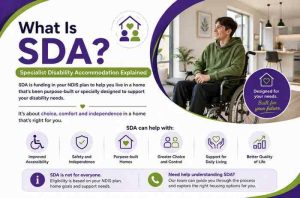
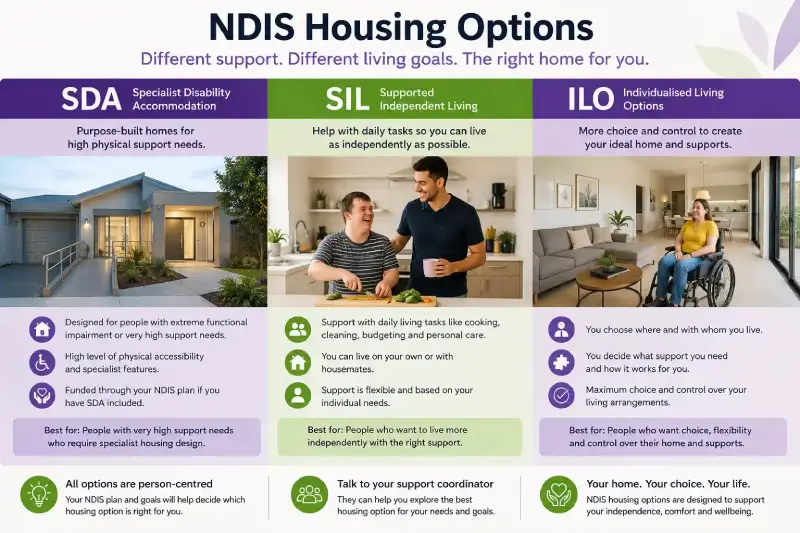
Specialist Disability Accommodation is purpose-built or modified housing designed for participants with extreme functional impairment or very high support needs. SDA funding covers the physical dwelling, not the day-to-day support.
SDA homes are generally built to one of four design categories:
- Improved Liveability - for people with sensory, intellectual, or cognitive disabilities.
- Fully Accessible - wheelchair-accessible homes with features like ceiling hoists and accessible bathrooms.
- Robust - homes built with durable materials for participants who may need a safer, more resilient environment.
- High Physical Support - homes with advanced accessibility features for people with significant physical disability, often including assistive technology.
SDA is only available to a small percentage of NDIS participants who meet strict eligibility criteria, and it typically requires a formal SDA assessment as part of the planning process.
2. Supported Independent Living (SIL)
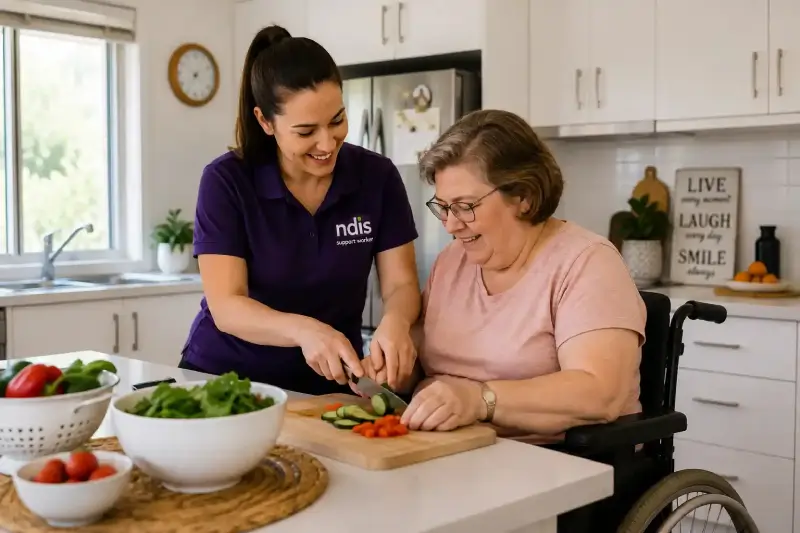
Supported Independent Living funds the support workers, not the home, for participants who live in a shared or individual household and need help with everyday tasks. Common SIL supports include:
- Personal care and hygiene assistance
- Meal preparation and household chores
- Medication management
- Skill-building for independent living
- Overnight or 24/7 support, depending on need
SIL is often paired with SDA for the housing, or a private rental for participants who don't require SDA-level housing. We run SIL homes across South East Queensland — see our current SIL vacancies, and read the difference between SIL and SDA if the two still feel blurred.
3. Individualised Living Options (ILO)
Individualised Living Options offer a more flexible and person-centred alternative to traditional group homes. Instead of a standard shared-living model, ILO allows participants to choose how they live, for example:
- Living alone with drop-in support
- Living with a host family
- Living with flatmates or friends
- Living with a partner while receiving tailored support
ILO funding is built around the participant's goals and lifestyle preferences rather than a fixed housing model, giving greater flexibility than SIL in many cases.
4. Individualised Living Arrangements (ILA) / Host Arrangements
A related option, sometimes referred to as an Individualised Living Arrangement, involves a participant living with a "live-in supporter", such as a family member, friend, or host, who provides support in exchange for funding. This model is gaining attention as a cost-effective and often more personal alternative to group homes.
5. Medium Term Accommodation (MTA)
Medium Term Accommodation provides temporary housing, generally up to 90 days, for participants who are between homes. For example, they may be waiting for their permanent SDA property to be ready, transitioning out of hospital, or waiting for home modifications to be completed.
6. Short Term Accommodation (STA) / Respite
Short Term Accommodation, often called respite, funds short stays away from a participant's usual home. This can give both the participant and their regular carers a break, while still providing appropriate support in a different setting for a few days or weeks at a time.
7. Home Modifications
While not "housing" in the traditional sense, home modifications are a key part of the NDIS housing landscape. This funding covers structural changes to a participant's existing home, such as ramps, bathroom modifications, or widened doorways, to make it safer and more accessible without requiring a move.
How to Choose the Right Type of NDIS Housing
Choosing the right housing type depends on several factors:
- Level of support needed - Do you need 24/7 assistance or just occasional help?
- Functional impairment level - SDA is generally reserved for extreme or very high support needs.
- Lifestyle preferences - Do you want to live independently, with family, with a host, or with flatmates?
- NDIS plan and funding category - Your plan will outline what you're eligible for under Core, Capital, or Capacity Building supports.
- Availability in your area - SDA and SIL properties can be limited depending on location, which is why early planning matters.
It's a good idea to speak with a Support Coordinator, Local Area Coordinator (LAC), or NDIS-registered housing provider to assess your eligibility and explore what's realistically available. Locally, we cover disability accommodation in Brisbane, NDIS accommodation in Logan, NDIS accommodation in Ipswich and NDIS accommodation in Redbank.
Frequently Asked Questions (FAQs)
Q1: Is all NDIS housing fully funded by the NDIS? Not always. SDA funding covers the dwelling for eligible participants, but supports like SIL and ILO fund the assistance a person receives, not necessarily the rent or property itself.
Q2: Who is eligible for SDA? Generally, only NDIS participants with extreme functional impairment or very high support needs qualify for SDA, following a formal assessment.
Q3: Can I choose who I live with under NDIS housing? Yes. Options like ILO are specifically designed to give participants more say over their living arrangements, including choosing housemates or living independently.
Q4: What's the difference between SIL and SDA? SDA refers to the physical home; SIL refers to the support workers who help you with daily living tasks. They're often used together but are separate types of funding.
Q5: How do I apply for NDIS housing support? Speak to your NDIS planner or Support Coordinator about your goals and support needs. They can help determine which housing and support categories should be included in your plan.
Final Thoughts
Understanding the different types of NDIS housing, from SDA and SIL to ILO and short-term respite, is the first step toward finding a living arrangement that genuinely supports your independence and wellbeing. Every participant's needs are different, so it's worth exploring all available options and speaking with a knowledgeable Support Coordinator before locking in a housing plan.
If you're just starting your NDIS housing journey, take your time, ask questions, and remember: the goal of the NDIS is to give you choice and control over your own life, including where and how you live.