Why this matters
Chronic wounds are one of the most under-recognised issues for NDIS participants. Poorly managed, they cause hospital admissions, amputations, and deaths. Well managed at home by qualified community nurses, most heal successfully. Complex wound regimes can also sit within high intensity supports.
The Scale of the Wound Problem
Chronic wounds affect around 420,000 Australians at any given time. For NDIS participants — especially those with limited mobility, diabetes, spinal cord injury, or circulation problems — the risk is significantly elevated.
Common wound types we see regularly:
- Pressure injuries (often called bedsores) — from sustained pressure on a body area
- Diabetic foot ulcers — from reduced sensation, pressure, and poor circulation
- Venous leg ulcers — from chronic poor venous return
- Surgical wound complications — dehiscence, infection, delayed healing
- Traumatic wounds — lacerations, abrasions, skin tears
Each requires different assessment, dressings, and treatment approaches.
What a Community Nurse Does on a Wound Visit
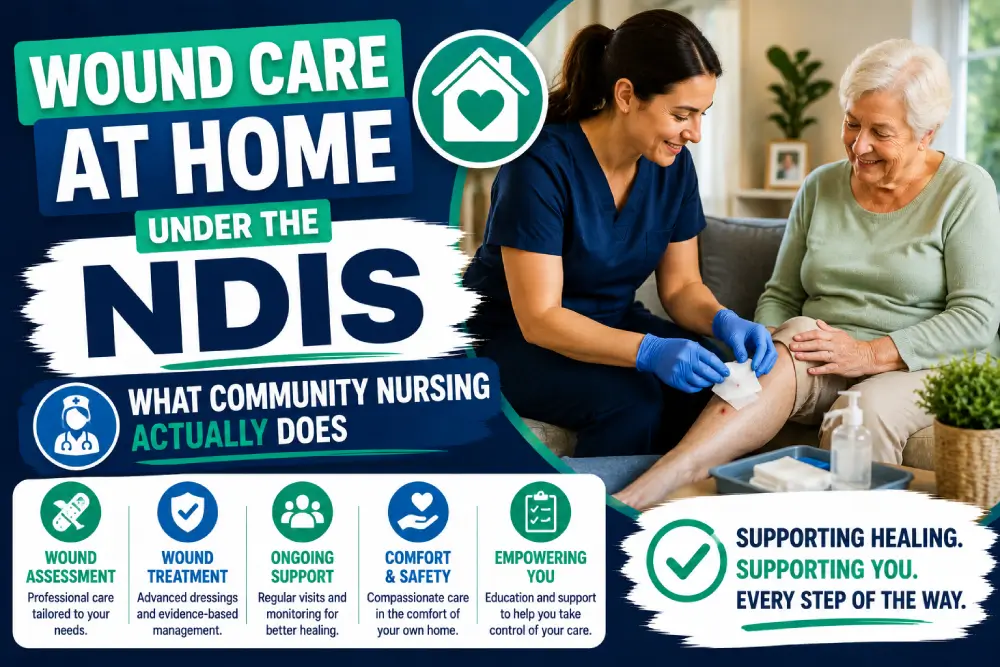
A typical wound care visit follows a clear sequence:
- Hand hygiene and PPE — before any wound contact
- Old dressing removal — careful to avoid trauma to healing tissue
- Wound assessment — size, depth, tissue type, exudate, surrounding skin, signs of infection
- Photography — documented wound photos track healing progress
- Cleaning — appropriate cleansing solution, technique matched to wound type
- Dressing selection — chosen based on wound characteristics, not habit
- Dressing application — correct technique, appropriate padding, good edge seal
- Documentation — measurements, observations, plan for next visit
- Communication — update you, update your GP if needed, update other providers
A thorough wound visit takes 30-60 minutes depending on complexity. Rushed wound care is bad wound care.
Who Can Provide Wound Care Under the NDIS
Wound care involves clinical risk and requires qualified staff. Under the NDIS:
- Registered nurses (RNs) — full scope for wound assessment, treatment, and complex wounds
- Enrolled nurses (ENs) — can perform wound care under RN supervision
- Support workers — can do very basic dressing changes for simple wounds under nurse-written care plans, but not complex wound management
A provider sending unqualified staff to do complex wound care is taking clinical risks they shouldn’t be taking. Always ask who specifically will be doing your wound care and what qualification they hold.
Dressings 101 — Why They Matter
Modern wound dressings aren’t just gauze and tape. Specific dressing types serve specific purposes:
- Foam dressings — absorb exudate, protect wounds with moderate drainage
- Hydrocolloids — maintain moist healing environment, good for low-exudate wounds
- Alginates — high absorbency, used for heavily exudating wounds
- Silver dressings — antimicrobial, used when infection is present or suspected
- Honey dressings — antimicrobial, useful for stalled wounds
- Negative pressure therapy — advanced treatment for large or complex wounds
Choosing the wrong dressing slows healing. Choosing the right one accelerates it. That’s why assessment each visit matters.
Wound Monitoring and Documentation
Good community nursing means measurable progress documented over time:
- Photos at regular intervals (usually weekly)
- Dimensions tracked — length, width, depth
- Tissue type noted — granulating, epithelialising, sloughy, necrotic
- Exudate amount and character documented
- Pain levels assessed each visit
- Trend analysis — is this wound improving, stable, or deteriorating?
That documentation serves two purposes — it guides treatment decisions AND it provides evidence at your NDIS plan review.
When to Escalate
Community nurses escalate to GPs or specialist wound services when:
- A wound isn’t showing expected healing progress
- Signs of infection appear — increased redness, warmth, pain, odour, exudate
- Systemic signs emerge — fever, malaise
- Pain patterns change significantly
- Wound deterioration is evident
A good provider has a clear escalation protocol — you shouldn’t have to navigate this alone.
How Wound Care Is Funded
Community nursing, including wound care, comes out of your NDIS plan under several possible categories depending on your plan structure:
- Community Nursing Care (Core Supports) — most common
- Continence and wound products (Consumables) — funds the actual dressings
- Sometimes Capacity Building — Improved Health and Wellbeing — for specific types of visits
Your plan manager or support coordinator can help work out where the funding sits in your specific plan.
Our Approach to Wound Care
At Aussie Bridge Care, wound care is one of the clinical areas we take most seriously. Every wound patient gets:
- An initial comprehensive assessment by a registered nurse
- A documented care plan with treatment rationale
- Regular photography and measurements
- The same registered nurse across visits where possible (continuity matters for wounds)
- Communication with your GP and specialists
More detail on our clinical services on the NDIS community nursing page.
FAQS
How often will I need wound care visits?
Depends on the wound — daily, every second day, or twice weekly are most common. Your nurse decides based on exudate levels, dressing choice, and healing stage.
Can I buy my own dressings?
You can, but your NDIS plan usually includes a Consumables budget for dressings. Talk to your provider about supply options.
What if my wound isn’t getting better?
A stalled wound triggers escalation — typically review by GP, then referral to a wound specialist or high-risk foot service if appropriate.