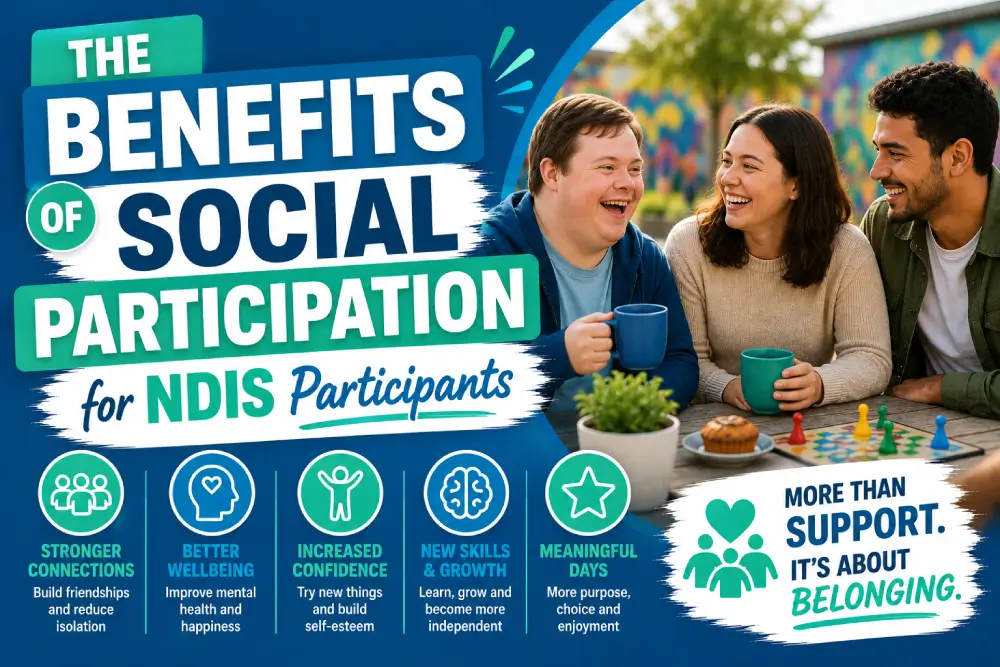
Why Social Participation Isn’t Just “Nice to Have”
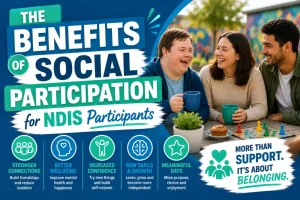
In NDIS planning, social and community participation can get framed as optional compared to “essentials” like personal care. That framing is wrong. Decades of research show social participation directly affects physical health, mental health, cognitive function, and life expectancy — for everyone, but especially for people whose disability makes social connection harder to build and maintain.
Isolation isn’t a minor quality-of-life issue. It’s a clinical one. Participants who are socially isolated have higher rates of depression, anxiety, cardiovascular disease, and cognitive decline. That’s why the NDIS funds social participation — not as a luxury, but as a core part of the supports that keep participants well.
Benefit 1 — Mental Health
Social connection is one of the strongest predictors of mental wellbeing. For NDIS participants:
- Regular social activity reduces rates of depression and anxiety
- Peer relationships with other participants build identity and belonging
- Structured group activities provide routine and purpose
- Community connection buffers against the isolation that often comes with disability
Benefit 2 — Physical Health
Social participation is often physical participation. Gym groups, walking clubs, swimming, dance classes — most community activities have a physical component that compounds the social benefit. The research on social engagement shows:
- Improved cardiovascular health from active participation
- Better sleep patterns
- Reduced markers of chronic stress
- Higher compliance with health routines (medications, appointments) when supported by a connected social network
Benefit 3 — Cognitive Function
Social interaction is cognitively demanding — it requires attention, memory, language, and emotional processing. Regular social engagement is one of the lifestyle factors most strongly linked to slower cognitive decline. For participants with conditions affecting cognition (acquired brain injury, intellectual disability, early-onset dementia), sustained social contact is clinically important.
Benefit 4 — Skill Development
Community activity is also where skills get built and maintained:
- Communication skills (conversation, group interaction, assertiveness)
- Self-management (planning, navigating transport, managing money — see our disability travel support for how travel training works)
- Practical skills (physical activities, craft, cooking in community settings)
- Emotional regulation in novel environments
Benefit 5 — Reduced Burden on Informal Supports
For participants whose family is their primary informal support, active community participation gives family members the respite they need to continue caring long-term. That’s not a side benefit — it’s often the difference between a family being able to maintain informal support and a family that hits burnout and can no longer provide it.
Benefit 6 — Employment and Economic Participation
For participants working towards employment or further education, community participation is a direct pathway. Most jobs and courses build on social skills, confidence in unfamiliar environments, and comfort with routine — all things that develop through consistent community activity. For younger participants, our youth mentoring in Brisbane builds those same skills with a mentor rather than in a group setting.
What the Evidence Actually Says
Research on social participation and disability outcomes (summarised from NDIA evaluation reports and peer-reviewed disability research):
- Participants with active social participation show 30-40% lower rates of depression diagnosis than isolated participants
- Frequent community engagement is associated with 25% lower GP visit rates for non-disability-related issues
- Community participation is the single strongest predictor of “life satisfaction” self-rating among NDIS participants
- Informal carers of participants with active community participation report significantly lower burnout rates
How to Access the Benefits
If you’re on the NDIS
Check your plan for Social and Community Participation funding. If it’s there, use it actively. If it’s not there, raise it at your next plan review with clear goals about what community connection would enable for you.
Start small
You don’t need to jump into daily community activity. Start with one regular activity you enjoy and build from there. Consistency matters more than volume — a weekly group you attend for a year builds more than random outings.
Match the activity to the person
The single biggest predictor of participation benefit is whether the activity actually matches the participant’s interests. Filler activities chosen by the provider don’t produce the benefits. Real participation — activities the person genuinely chose — does.
Use peer support
Some of the best social participation outcomes come from participants supporting each other. Our group programs specifically create space for participants to build friendships with each other, which often outlast the programs themselves.
How Our Community Participation Service Works
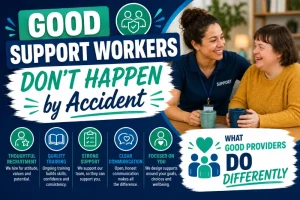
We run community participation differently from a lot of providers. Our approach:
- Interview the participant (not the family alone) about actual interests before any activity planning
- Build activity schedules around interests, not provider convenience
- Match support workers who share interests with the participant where possible
- Review every 3 months — are activities still working, are there new interests to explore
- Build towards independence where that’s the goal